
Three emerging Māori researchers are leading innovative projects that draw on both mātauranga Māori and cutting-edge science to improve cancer outcomes for whānau Māori.
From exploring how papakāinga can nurture and strengthen the practice of Rongoā Māori, to developing next-generation immunotherapies with fewer side effects, to enhancing genomic tools that more accurately predict treatment responses for Māori and Pasifika patients, this year’s Māori Cancer Researcher Award recipients reflect the depth, diversity, and strength of the growing Māori cancer research workforce.
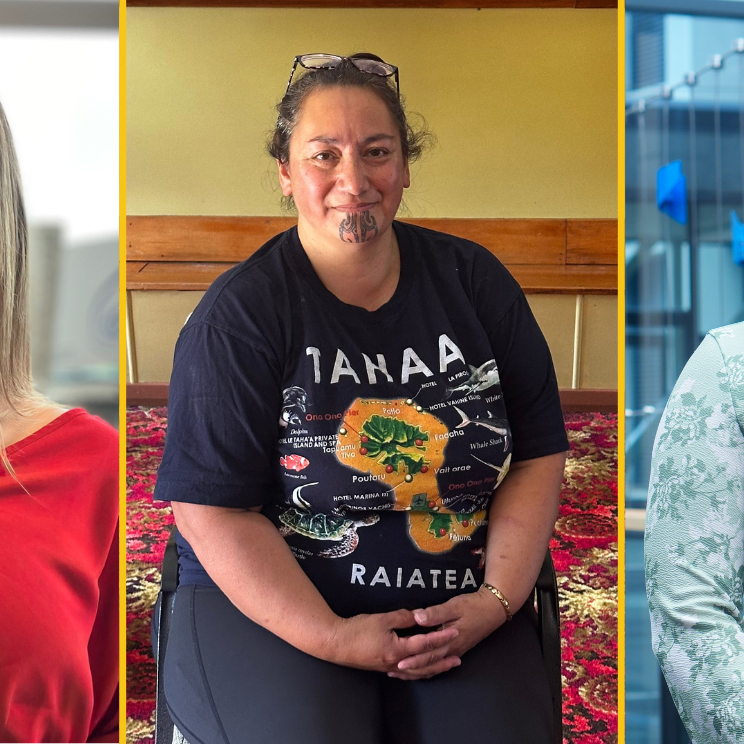
This is the fifth year for the awards, which are a partnership between Te Kāhui Matepukupuku o Aotearoa (Cancer Society New Zealand) and Hei Āhuru Mōwai Māori Cancer Leadership Aotearoa that demonstrates the two organisations’ shared commitment to address inequity in cancer care, foster hauora Māori aspirations and build a culturally grounded research workforce.
This year two PhD scholarships and a master’s scholarship have been awarded.
Rongoā Māori practitioner and researcher Robbie Richardson (Ngāti Raukawa, Ngāti Tukorehe, Ngāti Hauiti ki Rata, Te Whanau a Apanui, Ngāti Tuwharetoa) is completing her doctoral research through Te Whare Wānanga o Awanuārangi.
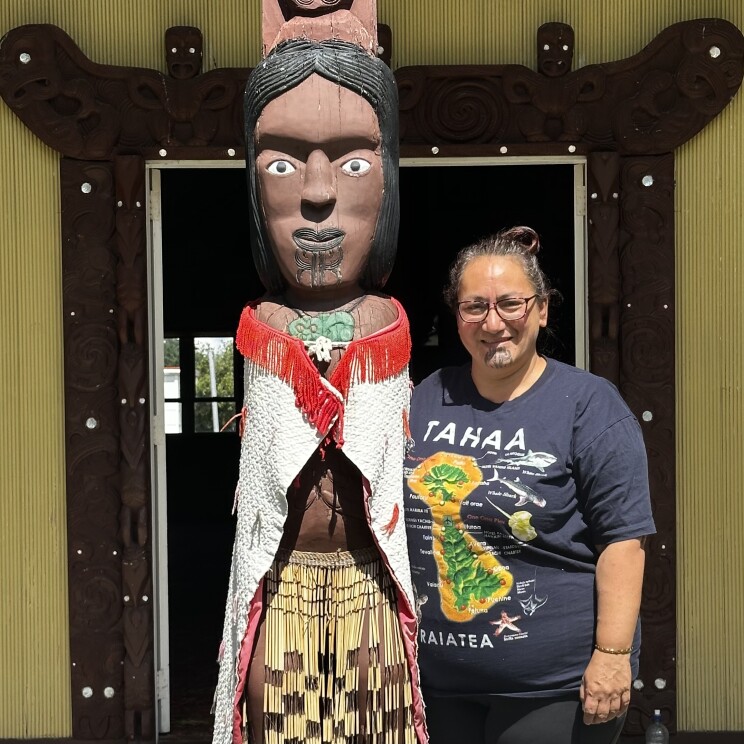
Her work focuses on her whānau’s ancestral home, Mangamāhoe, exploring how papakāinga living and Rongoā Māori practices can help protect whānau and whenua in the face of PFAS contamination from the neighbouring Ohakea Air Force Base – chemicals that persist in the environment for more than 150 years and have been linked to increased cancer risk.
Robbie describes the research as her calling. Living on the contaminated whenua, she carries their stories, grief, and hopes of her whānau and hapū.
“Environmental contamination is not theoretical for us as a hapu. When our whenua or our waterways are poisoned, our bodies absorb it, our whakapapa carries it and our future pays for it.”
Robbie says her work is also a way to honour tūpuna and mokopuna, but in particular her work is for her father who passed away from cancer just a year after residents were first informed about the contamination.
“That moment became my tohu (sign). I knew then that our healing is bound to the healing of our whenua.”
Robbie’s aims for her research include building evidence for Rongoā Māori within cancer prevention and survivorship frameworks; supporting whānau and hapū health sovereignty in contaminated environments; and advocating for Māori-led models of care.
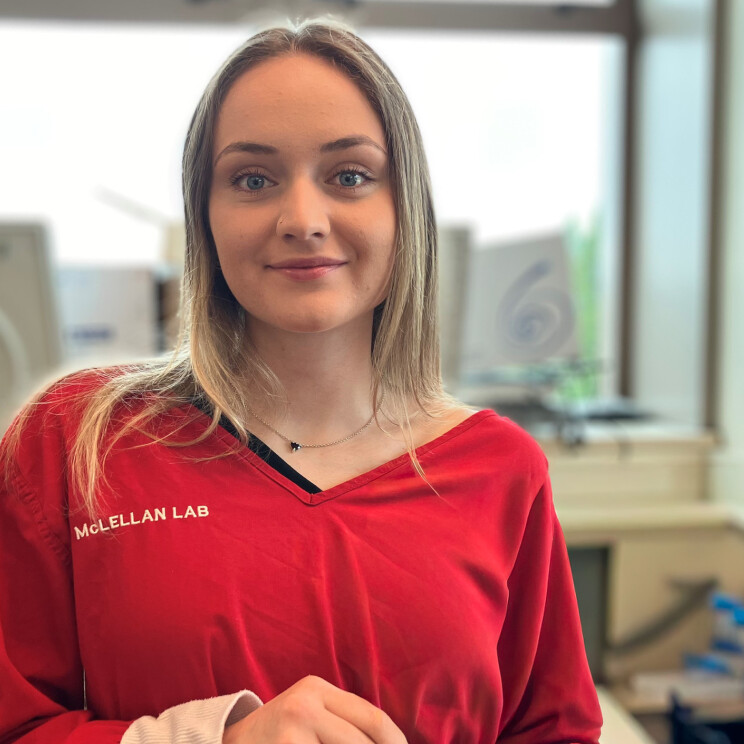
Ariana Drabble (Te Arawa - Ngāti Whakaue, Ngāti Raukawa - Ngāti Koroki, Ngāti Toa - Ngāti Kimihia) hopes her PhD research at the University of Otago | Ōtākou Whakaihu Waka could lead to more robust, longer lasting immunotherapy with fewer relapses and side effects.
Her research will look to tap into and better understand the power and potential of Natural Killer (NK) cells.
“Our immune system can be reprogrammed to destroy cancer cells, but current CAR T cell therapies for blood cancers often fail when tumours evade detection or supress T cell activity. NK cells have powerful cancer-killing abilities and a safer profile. By combining CAR T cells with CAR-engineered NK cells, we aim to harness their complementary strengths. NK cells can guide and support T cells while reducing factors that shut down immune responses.”
In the last five years Ariana’s mother, grandmother, an aunt and uncle have all received cancer diagnoses.
“Each diagnosis was not just a moment of grief, but confirmation that this mahi is not simply academic, but it is a commitment to my whānau, my tūpuna and generations to come.”
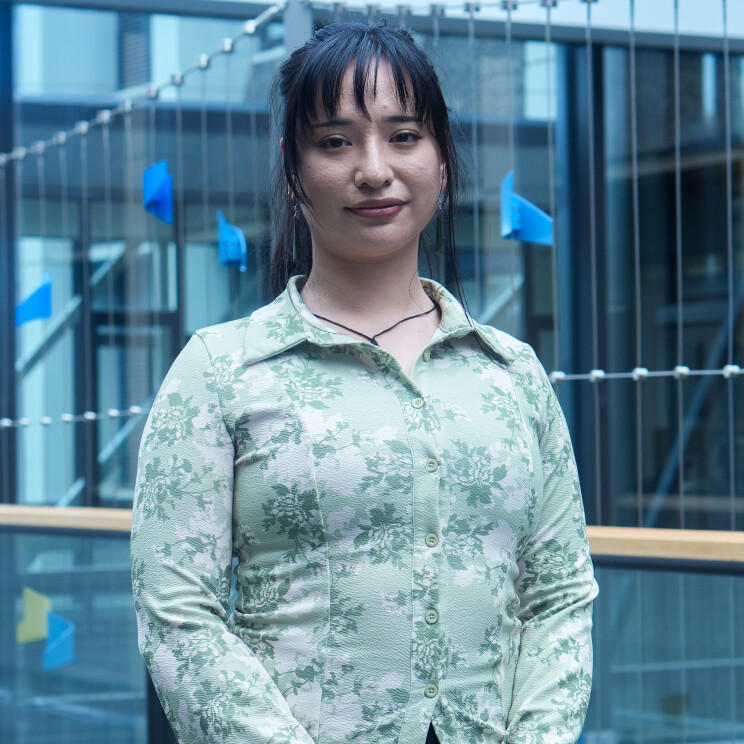
Katya Hutton (Ngā Puhi, Ngāti Kahu ki Whangaroa, Ngāti Kura) from Waipapa Taumata Rau | The University of Auckland is undertaking her Master’s looking at the impact of using Māori genomic information to improve the accuracy of cancer immunotherapy predictions for Māori and Pasifika patients.
Current biomarkers guide treatment decisions and predict treatment responses but rely on global DNA reference databases that lack representation from Indigenous populations. If we don’t take into account the natural variability among underrepresented communities when using DNA reference databases to interpret genomic biomarkers, there is a risk that we lose the precision in our precision health approach.
“This could lead inappropriate care for them,” says Katya.
“My goal is to accelerate precision care and precision heath research to ensure that every patient in Aotearoa – no matter what age, sex, ethnicity or ancestry – is getting the best care they can get.”
Cancer Society Director of Research and Innovation Christelle Jolly says the Awards empower Māori researchers to pursue the questions that matter most to their communities.
“Each of these projects has the potential to directly improve cancer outcomes for whānau. This is why investing in a strong and supported Māori cancer research workforce matters so much.”
Hei Āhuru Mōwai Tumuaki (Chief Executive) Anna-Marie Ruhe says the organisation is immensely proud to stand alongside these emerging researchers whose work carries the aspirations of their whānau, hapū, and iwi.
Their projects, she says, demonstrate what becomes possible when mātauranga Māori and scientific innovation are supported to flourish.
“These awards are not just an investment in individual researchers – they are an investment in a future where Māori leadership in cancer research is strong, visible and transformative. When Māori are empowered to ask the questions that matter to our communities, we move closer to a
health system where whānau Māori can access care, treatments, and solutions that truly work for them.”
Background information
About Hei Āhuru Mōwai
Hei Āhuru Mōwai Māori Cancer Leadership Aotearoa is a national network of Māori cancer professionals, clinicians, researchers and whānau who are committed to rangatiratanga in cancer control, eliminating cancer inequities between Māori and non-Māori and accelerating hauora gains for whānau Māori.
About the Cancer Society of New Zealand
Cancer Society New Zealand | Te Kāhui Matepukupuku o Aotearoa is committed to advance the country towards a future free from cancer. We are the country’s leading organisation dedicated to reducing the incidence and impact of cancer. Since 1929 we have walked alongside individuals and their whānau to ensure no one faces cancer alone – with our promise to support anyone, anywhere, with any cancer.
We provide vital community support, advocate for better outcomes through prevention and early detection, and support world-class research and innovation. With divisions throughout the motu, we offer a wide range of support to help people navigate the challenges of cancer. This includes emotional support, practical guidance, transport to treatment, accommodation during treatment, an 0800 CANCER helpline and access to trusted information.
Achieving a future free from cancer requires collective effort, and we are proud to partner with communities, researchers, and supporters to make this vision possible.