
Skin cancers are the most common cancers diagnosed in Aotearoa New Zealand.
What is skin cancer?
Skin cancer is cancer that begins on the skin.
Like the rest of your body, the skin is made of tiny 'building blocks' called cells.
Skin cancer begins when these cells are damaged, for example, by the sun, and they become cancerous.
Cancer is a disease of the body's cells. It starts in our genes. Our bodies are constantly making new cells, a process controlled by certain genes. Cancers are caused by damage to these genes. As the damaged cells replicate a lump or tumour is formed.
Tumours can be:
- Benign - not cancerous. These do not spread to other parts of the body.
- Malignant - cancerous
Early detection of skin cancer
-
Skin cancer is the most common type of cancer, and because it begins on the outside of the body, it’s also one of the easiest to find and treat.
-
When skin cancer is found early, most skin cancers can be completely removed by surgery.
-
Early detection of skin cancer relies on people becoming familiar with their skin and recognising changes as early as possible. Currently there is no national screening programme for skin cancer.
-
Some skin cancers, such as melanoma, can spread very quickly if untreated, so, if you see a spot that worries you, show your doctor or specialist nurse early.
-
Talk to your doctor if you have a family history of melanoma, or if you think you might have other risk factors such as a lot of sun exposure, or a history of unprotected skin, as you may need checks more often.
You can learn more about early detection at SunSmart.
The three most common types of skin cancer are:
- BCC - basal cell cancer
(The most common, usually pink and may bleed or itch / the growth is confined locally, potentially more dangerous on the face). - SCC - squamous cell cancer
(More serious, as they can spread to the lymph glands / often arises from sunspots / are usually scaly and may be tender). - Melanoma
(The most serious, as they can spread via the blood stream throughout the body / can arise anywhere on the body, including areas that have never seen the sun / can be raised or flat, fast or slow growing and rarely, can be pink in colour).
You should regularly check your skin, including skin not normally exposed to the sun, so that you will be aware of any changes.
What does skin cancer look like and when should I get checked?
Skin cancer can look like a spot, freckle or mole that is new or existing, and:
-
has changed in colour, shape, or size
-
looks different from others (an ‘ugly duckling’)
-
is sore, itchy, crusty or bleeds
-
is firm, growing or becomes raised quickly.
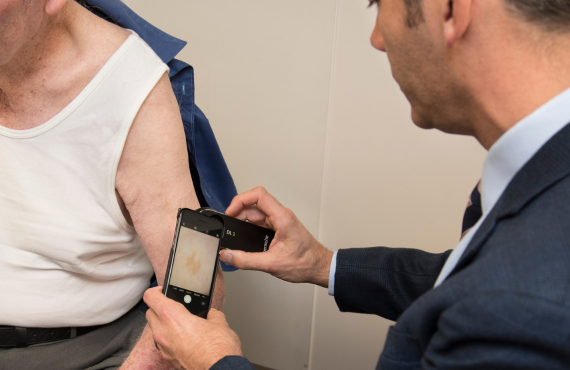
Having these symptoms does not mean you have skin cancer, but it is important to get any changes checked by a GP or specialist who is trained to detect skin cancer, including the use of a dermatoscope (a skin surface microscope).
If left untreated, melanoma can spread rapidly to other parts of the body.
The symptoms of skin cancer can differ from person to person and according to the type of skin cancer. The three most common types of skin cancer are basal cell cancer (BCC), squamous cell cancer (SCC) and melanoma.
For more detail about symptoms of melanoma, visit our Melanoma of the skin page or visit Melanoma New Zealand.
You can visit Healthify for further information about skin cancers including SCC, BCC or melanoma.
Checking your skin (self-examination)
Check your skin regularly. We suggest checking every 1-3 months so it becomes a regular habit.
Talk to your doctor about how often they recommend you check your skin, as this may depend on your age, skin type or whether you have previously had skin cancer.
Look over your entire body. Skin cancers can occur in places you cannot easily see yourself. Ask someone to help check:
-
armpits
-
behind the ears
-
scalp
-
bottom
-
soles of the feet
-
fingernails and toenails
If you don't have someone to help, use a hand mirror to check difficult-to-see areas.
Keep track of how spots and moles look so you know if they have changed since you last checked your skin.
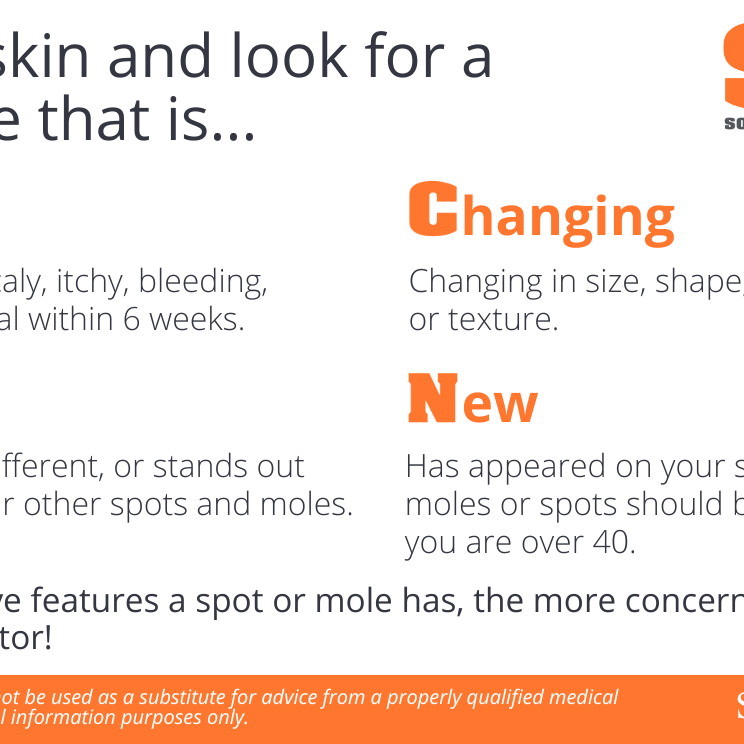
SCAN™ and SCAN Your Skin™ are registered trademarks and the intellectual property of the Skin Cancer College Australasia Limited (SCCA). They are used here with the permission of and subject to terms and conditions specified by the SCCA.
Tips for talking to your doctor
-
make a list of what you have noticed, including as much detail as possible
-
think about your family/whānau history of cancer and any other risk factors you may have, and tell your doctor
-
a healthcare professional may examine your skin and decide that you don’t need a biopsy, but if you still feel unsure, you can ask for a second opinion if you want one
-
take a family/whānau member or friend with you to the appointment for support
Diagnosing skin cancer
The doctor or specialist nurse may:
-
examine the spot or mole or perform a full skin check using a dermatoscope (a skin surface microscope)
-
recommend that a spot or mole is removed for closer examination (a biopsy)
If a spot or mole is difficult to remove or covers a large area, you may be referred to a specialist skin doctor (dermatologist) or plastic surgeon.
Skin cancers are diagnosed using physical examination and biopsy.
What causes skin cancer?
Most skin cancer is caused by too much exposure to ultraviolet radiation (UV rays), either from the sun or sunbeds/tanning beds.
People of all ages and skin colours can be diagnosed with skin cancer, but some things increase your risk of getting skin cancer.
Risk factors for skin cancer include:
-
had skin cancer before
-
family/whānau members with skin cancer
-
a skin type that sunburns easily
-
red, blonde or fair hair
-
aged over 40
-
many moles or larger moles
-
use of sunbeds/tanning beds (solariums)
-
having spent a lot of time in the sun unprotected
Further information about checking your skin:
Visit ScanYourSkin, by the Skin Cancer College Australasia, to learn more about checking your skin for the most common types of skin cancer, including melanoma, BCC and SCC.
Visit Melanoma New Zealand for further information on checking for melanoma.
Download Tirohia tō kiri / Check your skin.
Learn more about skin cancer:
Check out SunSmart for more information about skin cancer.
Learn more at DermNet NZ or Cancer Council Australia.
Melanoma of the skin is the most serious of the three common types of skin cancer.
Learning more about the treatments you've been offered can help you prepare.
We are here to help and support you and your whānau through cancer diagnosis, treatment and recovery…
Skin cancers are one of the most common cancers in NZ. Recognition of early signs and early seeking …
We know that going through cancer is tough and can raise many questions. You are not alone.
We have health professionals to answer your questions and provide the support you need.
Get in touch