
If you have any symptoms of prostate cancer, they need to be checked by your doctor.
How is prostate cancer diagnosed?
If you have symptoms of prostate cancer, your doctor may recommend several tests to check for abnormal changes.
These tests may include:
-
Blood test
-
A blood test to measure your PSA levels
-
-
Digital rectal examination
-
Your doctor may examine your prostate by inserting a gloved finger into your rectum to feel the prostate
-
-
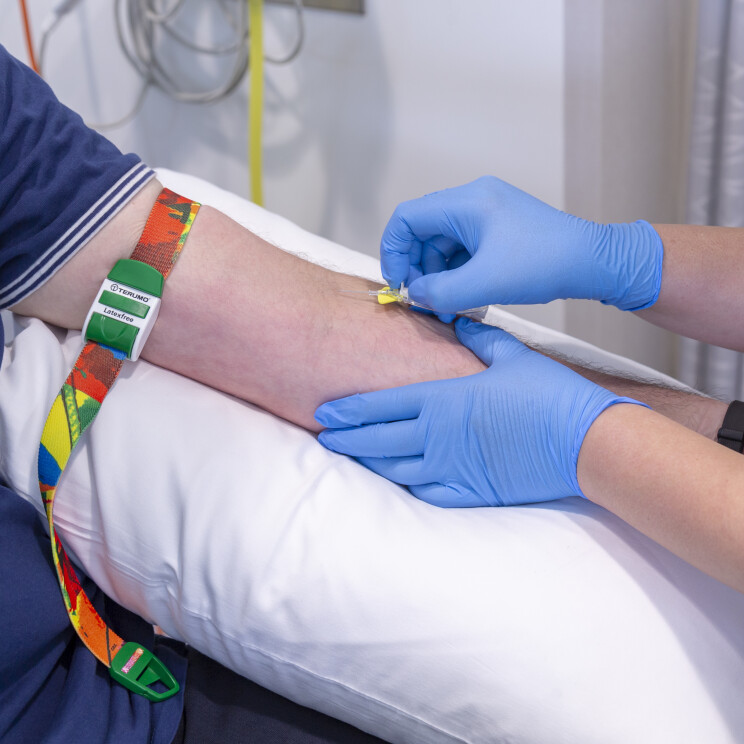
Biopsy
-
A biopsy removes a small sample of tissue to determine whether cancer is present
-
Following a prostate biopsy, many people notice blood in their urine or semen for a few days.
-
If your test results show cancer, you will need more tests to learn how advanced the cancer is.
Bone scan
A radioactive dye is injected into your arm and a scan will show if that dye has been attracted to abnormal cells in your bones.
CT scan
A CT (computerised tomography) scan uses x-rays from different angles to make a 3D picture of inside your body.
MRI
An MRI (magnetic resonance imaging) uses magnets and radio waves to make a detailed picture of the inside of your body.
PET/CT scan
The scan begins by injecting a radioactive dye into your arm. The dye will attach to the prostate cancer cells. You will have two types of scans that will find which areas in the body where the cancer may be.
- Mā te mōhio ki te wāhanga o tō matepukupuku repe ure, e āwhina i tō rōpū maimoa ki te whakamahere i ō maimoatanga.
- Ka whakaritea he whakamātau toto prostate specific antigen (PSA) ki te ine i te taumata PSA kei roto i tō toto. Mehemea kua piki tō PSA, he tohu tēnei kua piki ake te mōrea o tō whai i te matepukupuku repe ure, e ai ki te tangata whai taumata PSA pai
- Ara anō ētahi atu take, atu i te matepukupuku, piki ai te PSA, nō reira, kāore e taea te whakamahi i te whakamātautau PSA anake ki te whakatau i te matepukupuku repe ure
- Ko te whakamātautau ā-mati tou, ko te pāorooro, ko te unuhanga ētahi atu whakamātautau.
- Mehemea kei roto te matepukupuku i to tauira unuhanga, ka tauinetia mā te whakamahi i te tauine ISUP (whakaritea ai ki tō kaute Gleason)
- He huarahi te mahi tauine ki te kōrero i te momo āhua ō ōu pūtau matepukupuku, te tere o tā rātou tipu, me te āhua o
tōna kaha ki te hōrapa ki wāhi kē o te tinana. - Tērā pea ka whakahaerehia ētahi atu titiro whakatau pērā ki te CT, ki te MRI rānei, ā, i ētahi wā, he titiro whakatau ā-kōiwi.
- Ka whakamahia ngā putanga o ngā whakamātautau me ngā titiro whakatau ki te kārawarawa i te wāhanga taumata o tō matepukupuku – tōna rahi, me tōna kaha rauroha.
After a diagnosis
If your test results show cancer, this can be a difficult time, and feelings can change from one moment to the next.
Everyone reacts differently when they learn they have cancer. There is no right or wrong way to feel.
Talk about your treatment options with your doctor, family and friends. Ask for as much information as you need. It is up to you how involved you want to be in decisions about your treatment.
I was very upset at first. I prepared myself for the worst and got it. I was confused but as I settled down I decided to take a positive view and that helped.
Trevor
Prognosis for prostate cancer
The prognosis is the likely outcome of a disease.
If the test results show prostate cancer, you may wish to speak with your treatment team about the prognosis.
The doctors will look at the stage and grade of the cancer as well as your age and general health to give a prognosis, but no doctor can predict the exact outcome for you.

You may hear your treatment team talk about the stage or grade of the prostate cancer.

We've put together a list of questions you may wish to ask your treatment team.
Surveillance, surgery, radiation treatment, hormone therapy or a combination are all treatment optio…

We are here to help and support you and your whānau through cancer diagnosis, treatment and recovery…
We know that going through cancer is tough and can raise many questions. You are not alone.
We have health professionals to answer your questions and provide the support you need.
Get in touch